
22 Jan 2026 – TRUTH AS THEATRE: PSYCHOANALYSIS, POWER, AND THE EMOTIONAL MACHINERY OF TRUMPISM
INTRODUCTION
Imagine a crowded stadium under the neon glow of a “Make America Great Again” banner. The air is thick with anticipation. On stage, a man speaks not in the measured tones of a policy wonk, but with the rhythmic cadence of a stand-up comedian and the bravado of a professional wrestler. He makes a claim that is demonstrably false—perhaps about crowd sizes or a rigged election. Fact-checkers in distant newsrooms begin their frantic scribbling, but in the stadium, the “truth” has already happened. It wasn’t a factual truth; it was a performative one. The statement functioned as a signal of loyalty, a thumb in the eye of the “elites,” and a catalyst for a shared emotional high. In this space, truth is not an objective reality to be discovered; it is a consequence to be produced.
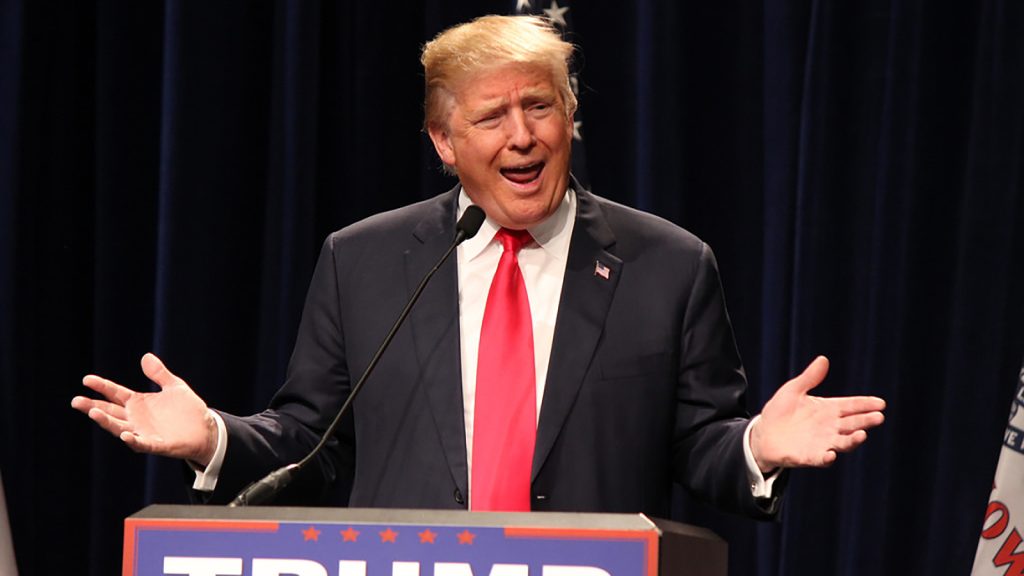
This shift from the factual to the performative marks the heart of “Trumpism.” To understand this phenomenon, we must look beyond traditional political science and venture into the realm of the psyche. By drawing on psychoanalytic insights—largely curated through Dutch scholarship from the Tijdschrift voor Psychoanalyse and thinkers like Martin Appelo—we can begin to interpret Trumpism not merely as a political movement, but as a sophisticated “psychic economy” that organises resentment, rewards transgression, and provides a fragile sense of self to a fragmented public.
The Glorification of Bitterness: Resentment as Political Fuel
In the essay De verheerlijking van rancune (The Glorification of Bitterness), the Dutch psychoanalytic tradition explores how grievance is transformed from a private burden into a public virtue. Bitterness, or rancune, is more than just anger; it is a “nibbling” resentment born of perceived humiliation or displacement.
For many, the globalised world has felt like a series of losses—loss of job security, loss of cultural status, and loss of a clear future. Trump’s genius lies in his ability to validate this Bitterness. He does not tell his supporters to “get over it”; he tells them they are right to be angry and that their anger is a sign of their moral superiority. He elevates the “victim” to the status of a “fighter.”
This creates a powerful bond. When a leader reflects a crowd’s resentment back at them with a smile and a “tough guy” persona, the Bitterness is no longer a source of shame. It becomes the glue of a community. The collective “we” is defined by who has “done this to us.” Politics then ceases to be about negotiation and starts to be about the public satisfaction of seeing the “enemy” punished.
The Perverse Political Style: The Pleasure of Provocation
In De perverse politieke stijl (The Perverse Political Style), analysts describe a mode of leadership that thrives on the violation of norms. In a psychoanalytic sense, “perversion” does not necessarily refer to sexual deviancy, but to a specific way of relating to the law. The perverse style acknowledges the rule only to find pleasure in breaking it.
Trump’s political career is a masterclass in this style. Whether it is mocking a disabled reporter, dismissing military heroes, or ignoring constitutional “red lines,” the transgression is the point. Each shattered norm is a “spectacle” that provides a visceral thrill to his base. It signals that the leader is not bound by the “boring” or “corrupt” rules that govern everyone else.
This style creates a feedback loop. The more the media and the legal system cry “foul,” the more his supporters see him as a “brave” rebel fighting a “rigged” system. The outrage of the opponent becomes the measure of the leader’s success. This approach represents a politics of “jouissance”—a complex and transgressive form of pleasure that derives greater satisfaction from disrupting existing systems than from their restoration.
STRUCTURED HATE: GROUP PSYCHOLOGY AND THE NEED FOR ENEMIES
The concept of Gestructureerde haat (Structured Hate) moves the focus from the individual to the group. Drawing on the ideas of Melanie Klein and Wilfred Bion, we can see how Trumpism utilises “splitting” as a primary psychological defence. Splitting is a primitive mental process where the world is divided into “all good” and “all bad.”
In this framework, the “in-group” is pure and patriotic, while the “out-group” (the “Deep State,” the “fake news media,” or “immigrants”) is the repository of all evil. This allows for the process of projection: instead of dealing with one’s own fears, failings, or complexities, they are projected onto a scapegoat.
Trump’s rhetoric often follows this Basic Assumption of “Fight-Flight.” The group exists solely to protect itself against an external threat. This “structured hate” provides a sense of clarity in a complex world. By providing a clear enemy, the leader relieves the follower of the burden of ambivalence. You don’t have to think; you only have to fight. This is the “paranoid-schizoid position” scaled up to a national political movement.
Will-o’-the-Wisps in the Night: Grandiosity and the Fragile Self
The metaphor of Dwaallichten in de nacht (Will-o’-the-Wisps in the Night) suggests a deceptive light that leads people astray in the darkness. This links directly to the discussion of narcissism. As Utrecht University’s Studium Generale noted in their analysis, “America has a narcissist as president,” and Martin Appelo has frequently commented on Trump’s “narcissistic character style.”
From this perspective, Trump displays the classic triad: grandiosity, a constant need for admiration, and a total lack of empathy for critics. However, psychoanalysis teaches us that grandiosity is often a “skin” stretched over a very fragile interior. The “inflation of the self” is a compensatory mechanism against deep-seated feelings of inadequacy or “emptiness.”
On the cultural stage of the 21st century—driven by social media and reality TV—this character style is highly rewarded. Loud certainty is mistaken for strength. When the leader reacts with “narcissistic rage” to any criticism, his supporters see it as “fighting back.” He becomes a “will-o’-the-wisp”—a bright, flickering light that promises a path out of the darkness but is ultimately driven by the internal necessity of maintaining its own fragile image.
COUNTERARGUMENT: THE LIMITS OF DISTANCE ANALYSIS
We do not have access to the private thoughts or clinical history of Donald Trump.
Critics argue that psychoanalysing a leader can be a way of “pathologizing” (treating as a disorder) political disagreement. If we say a movement is driven by “narcissism” or “paranoid splitting,” are we simply dismissing the very real, material concerns of millions of voters? Furthermore, people are complex; a man can be a “perverse” performer on stage and a pragmatic dealmaker behind closed doors.
The value of the psychoanalytic lens is not in providing a medical diagnosis of one man, but in offering a cultural analysis of a relationship. We are not just looking at Trump; we are looking at the “Trump-Follower” pair. The goal is to understand the “psychic fit” between a specific type of personality and a specific type of societal anxiety.
CONCLUSION
What does this lens clarify? It shows us that Trumpism is not a “mistake” or a “glitch” in the system; it is a response to a profound hunger for recognition and a deep-seated fear of displacement. It clarifies that facts alone will never defeat a movement built on performative truth and structured hate.
To reduce the incentive for Bitterness and spectacle, institutions and citizens must address the “grievance” without rewarding the “transgression.” Media outlets must resist the urge to profit from the “jouissance” of outrage. Educational systems must move beyond teaching facts and start teaching the psychological literacy required to recognise “splitting” and “projection” in real-time.
Ultimately, Trumpism is a mirror. It reflects a society that has become too atomised, too focused on “winners and losers,” and too reliant on the “loudest voice in the room.” If we wish to see a different image in the mirror, we must change the “psychic economy” of our politics from one of Bitterness to one of repair.