
A POETIC WARRIOR FOR FREEDOM AND HUMAN DIGNITY
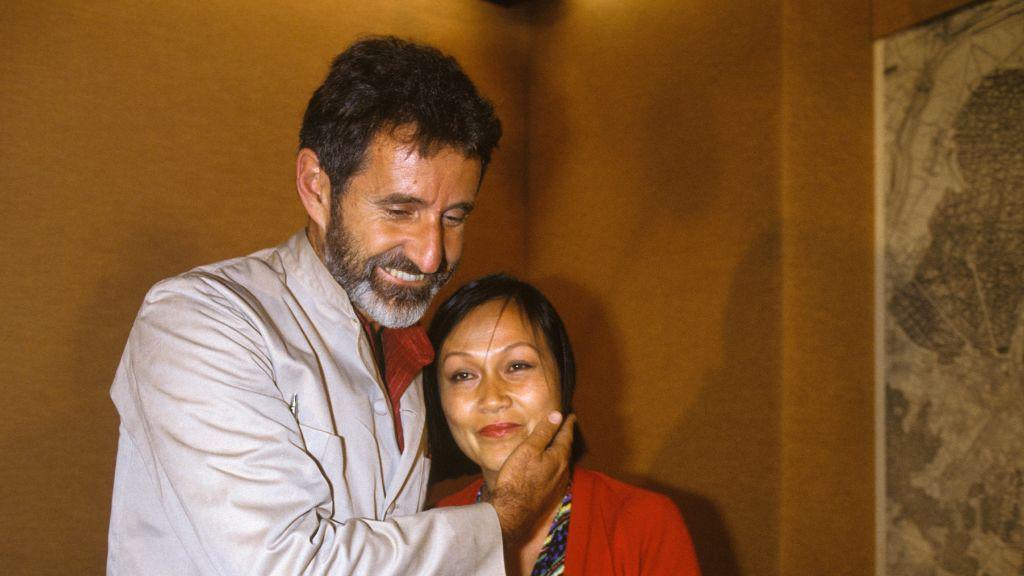
With the passing of Breyten Breytenbach on November 24, 2023, in Paris, the world and I have lost one of the greatest voices in Afrikaans literature and an unyielding champion for human rights and freedom. Born in 1939 in Bonnievale, South Africa, Breytenbach’s life extended far beyond literary boundaries. He was a poet, writer, painter, activist, and symbolic ferryman of freedom, navigating the waters of political oppression and cultural diversity.
The Beginning of a Calling
Breytenbach’s early life in the tranquil rural areas of the Western Cape was marked by a natural affinity for freedom and the aesthetic. After studying at the Cape Town School of Art, his travels took him to Europe, where he met Yolande Ngo Thi Hoang Lien, a French-Vietnamese woman whose love irrevocably changed his life. This union, however, rendered him an “illegal” person in his own country under apartheid’s unjust laws, which prohibited interracial marriages.
This personal injustice sharpened his political awareness and fueled his activism. As a co-founder of Okhela, an underground anti-apartheid movement, and later as a prisoner of conscience, Breytenbach drew global attention to the systemic injustices of apartheid. His nine-year imprisonment, including two years in solitary confinement, did not break his spirit. Instead, he used this time to create literary masterpieces like Mouroir and Confession véridique d’un terroriste albino, testaments to his indomitable spirit.
A Great Afrikaans Poet
As a poet, Breytenbach redefined the Afrikaans literary landscape. His debut collections, Die ysterkoei moet sweet and Katastrofes, won the A.B.P. Prize in 1965, and his work continued to inspire critics and readers alike. Winning the Hertzog Prize no fewer than three times, he developed a unique voice filled with neologisms, surrealistic imagery, and deep influences from Zen Buddhism. His work explored themes of transience and rebirth, evoking a sense of tenderness and acceptance, even in the face of mortality.
Breytenbach’s poetry and prose were not merely literary contributions; they were acts of rebellion against spiritual and political oppression. He wielded Afrikaans as a tool of resistance—a language often, and erroneously, associated with apartheid, which he transformed into a medium for freedom and inclusion.
Artist and Activist
Beyond his writing, Breytenbach expressed himself through painting, using colors and forms to explore the boundaries of identity and humanity. He wove his art and literature with his political and social consciousness, dedicating himself to the development of democracy and culture in Africa through his work at the Gorée Institute.
He became a global citizen, dividing his time between France, the United States, Senegal, and South Africa. His contributions to the anti-apartheid movement in France, particularly through his involvement with Danielle Mitterrand and the organization France Libertés, made him a symbolic bridge-builder between continents and cultures.
A Legacy of Freedom
Breytenbach was not just a poet or an artist; he was a ferryman of freedom—a figure who taught us how to dismantle barriers and build bridges between people, ideas, and worlds. His legacy lies not only in his literary oeuvre but also in his life as an example of how art and activism can intertwine to promote greater human dignity and justice.
His work remains a rich source of inspiration and challenge. He urged us to imagine an Africa that transcends borders and divisions—an Africa built on hope and unity.
With Breyten Breytenbach’s passing, we have not only lost a great poet but also a voice that always cried out for justice and the celebration of human potential. May his legacy live on in his words, his art, and the freedom for which he so fearlessly fought.
Rest in peace, Breyten. You showed us the way. RESPECT!