
WEDNESDAY 7/5/2025 – VOTING FOR THE NEXT POPE
Introduction
A profound silence settles over the Vatican. Inside the Sistine Chapel, more than 130 cardinal electors from around the world have gathered to fulfill one of the most sacred and historic tasks of the Catholic Church: to choose the next Pope. With the death of Pope Francis, the Chair of St. Peter lies vacant, and the responsibility to elect his successor falls to the College of Cardinals. Today marks the formal beginning of the conclave — a centuries-old process of prayer, secrecy, and discernment. The cardinals will cast their votes beneath Michelangelo’s frescoes, guided by the Holy Spirit, and sealed off entirely from the outside world. At around 17H30 local time, the doors will close. The first vote will follow, and all eyes will turn to the chimney above the Sistine Chapel. Will the smoke be black or white? The world waits for a signal — for history to turn a page.
Total Confidentiality
From the moment the conclave begins, the cardinal electors are completely cut off from the outside world. No newspapers, broadcasts, or messages are permitted. The entire area is carefully swept for recording devices by trusted technicians. The Camerlengo and three assistants oversee this period of isolation. Violating the secrecy of the conclave is considered a grave moral offense. Every elector, regardless of voting rights, is bound by this obligation — both during and after the election. The conclave’s strength lies in its silence.
Two-Thirds Plus One – 133 Cardinals, 89 Votes
For a candidate to be elected pope, he must receive a two-thirds majority of the votes cast — or, when the number of electors does not divide evenly into thirds, two-thirds plus one. With 133 cardinal electors present, the magic number is 89 votes. This ensures that any pope elected enjoys broad support within the College. If no candidate reaches the threshold on the first ballot, voting continues: two ballots in the morning, two in the afternoon, until a decision is made. This system, though ancient, is designed to prevent factionalism and to allow reflection. The Holy Spirit, not politics, is meant to guide the outcome. Only one vote will take place on the first day. Each elector writes the name of his chosen candidate on a pre-printed ballot beginning with the Latin phrase. “I elect as Supreme Pontiff.”
The Scrutineers – Eligo in Summum Pontificem
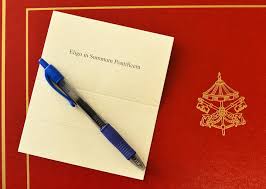
The voting process unfolds in three stages. First, the Masters of Ceremonies distribute blank ballots to each elector. Printed on each is the solemn phrase Eligo in Summum Pontificem. “I elect as Supreme Pontiff.”
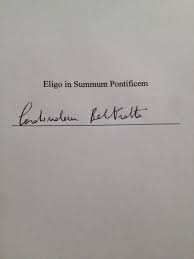
The electors privately write the name of their chosen candidate in handwriting that cannot be easily identified. Next, nine cardinals are chosen by lot: three Scrutineers who count the votes, three Infirmarians to collect ballots from any sick cardinals, and three Revisers to verify the accuracy of the count. Once ballots are filled, the Secretary of the College, the Master of Liturgical Celebrations, and all non-electors leave the chapel. The junior Cardinal Deacon then locks the doors. In this moment, total seclusion begins. Each elector, one by one, approaches the altar, places his folded ballot in the chalice, and swears that his vote reflects only the will of God. It is a moment of personal conscience and spiritual gravity.
Conclusion – Compilation of the Ballot Papers
With the doors locked and the outside world left behind; the cardinals begin the sacred work of the election. Ballots are collected and unfolded by the Scrutineers. The names are read aloud, one by one, and marked on a tally sheet. Once the count is complete and verified, if no one has reached the two-thirds threshold, the ballots are burned. A special stove installed in the Sistine Chapel turns the paper to smoke — black for an inconclusive vote, white for a pope elected. The first ballot rarely produces a decision, but each vote is a step closer to clarity. The world, watching from St. Peter’s Square and beyond, will look to the chimney for its signal. Within the chapel, the cardinals continue in silence and prayer, knowing that their decision will shape the Church — and perhaps the world — for years to come. In these hidden hours, a new chapter in Catholic history is being written, line by line, vote by vote.
Resource: https://www.killaloediocese.ie/wp-content/uploads/2018/05/6319_6319_Conclave_Mgr_Charles_Burns_EX48.pdf